Messaging and your profile
The #1 mistake new trainers make when they market themselves

Jaron Williams
4 min read
Key takeaways
- Listing what every trainer does doesn't help a client choose you.
- In your profile, flyers and posts, say who you help best, what working with you is like, and why you.
- Try the copy-and-paste test: if any trainer could use your marketing word for word, rewrite it.
Read enough trainer profiles, Instagram bios and flyers and you'll see the same thing over and over: "I create customized workout plans based on your goals. I provide nutrition guidance. I deliver workouts through an app so you can train anywhere."
Nothing in there is wrong. The problem is that every trainer says it.
The restaurant problem
Imagine a friend tells you, "You have to try this restaurant! They cook the food, put it on a plate, and bring it to your table!"
You'd say, "That's... exactly what a restaurant does. Why should I go to this one?"
That's what a potential client hears when your profile, your flyer or your Instagram is the job description of a personal trainer. Custom programs, nutrition guidance and an app are the plate and the table. Clients already assume you do them. None of it tells them why you're the right trainer for them.
Why isn't my personal training marketing working?
Usually because it makes the client do the work of deciding. People have so much going on in their heads: work, kids, money, maybe an old injury or a bad experience at a gym. By the time they're looking for a trainer, they don't want to spend any more energy than necessary deciding who to work with.
If they read five profiles that all say the same thing, they have to guess. Most will pick on price, or close the tab and decide to "start next month." Your job is to make the decision to work with you as easy as possible.
What should a personal trainer say in their marketing?
- Who do you help best? Be specific. "Busy parents who haven't worked out in years" beats "all fitness levels." You can still train other people. You're just telling the right ones they've found you.
- What is it like to work with you? Are you calm and patient, or high-energy? Do you explain the why behind every exercise? Do you check in between sessions? This is what clients actually live with every week.
- Why you? Your story, what you've been through yourself, the kinds of results you've helped clients get, or what you do differently.
Example: a profile bio, before and after
I'm a certified personal trainer passionate about helping people of all fitness levels reach their goals. Whether you want to lose weight, build muscle, improve your endurance or just feel better, I create customized workout plans based on your individual needs. I also provide nutrition guidance to support your progress and deliver workouts through my app so you can stay on track anywhere. I believe fitness is a journey, and I'm here to support you every step of the way with accountability, motivation and expert guidance. Let's work together to become the best version of you!
I help busy professionals in their 30s and 40s get strong again after years behind a desk. We start with the basics, I explain the why behind every exercise, and I check in between sessions. I spent ten years at a desk job myself, so I know how hard it is to start.
Notice the second version never says "customized workout plans." It doesn't have to. A client reading it already knows the plan will fit them, because it describes them.
It's also short. People skim, and you only get a few seconds of their attention, so lead with who you help and keep the rest tight.
The copy-and-paste test
Read your profile, your flyer or your latest post out loud and ask yourself: could any other trainer in my city put their name on this without changing a word? If the answer is yes, rewrite it until the answer is no.
Example: a personal training flyer, generic vs. specific
Scroll through social media and you'll find trainer after trainer posting a flyer that looks like this:
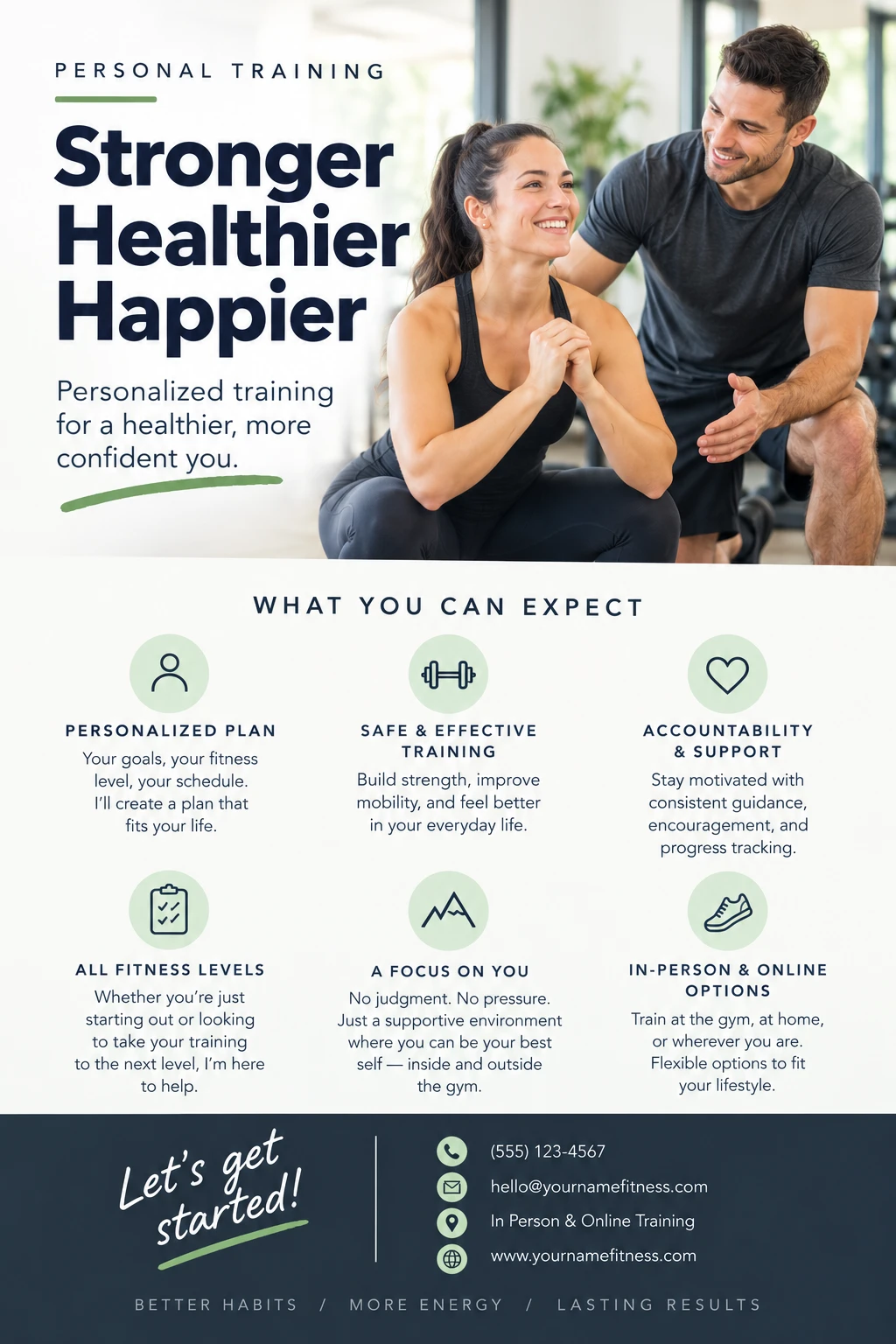
It looks professional, but read what it actually says: personalized plans, safe and effective training, accountability, all fitness levels, in-person and online. That's the plate and the table again. Nothing tells a client who it's for, what training with this person is like, or why them. When every flyer in the feed looks like this one, people scroll right past.
Now compare it with this one:
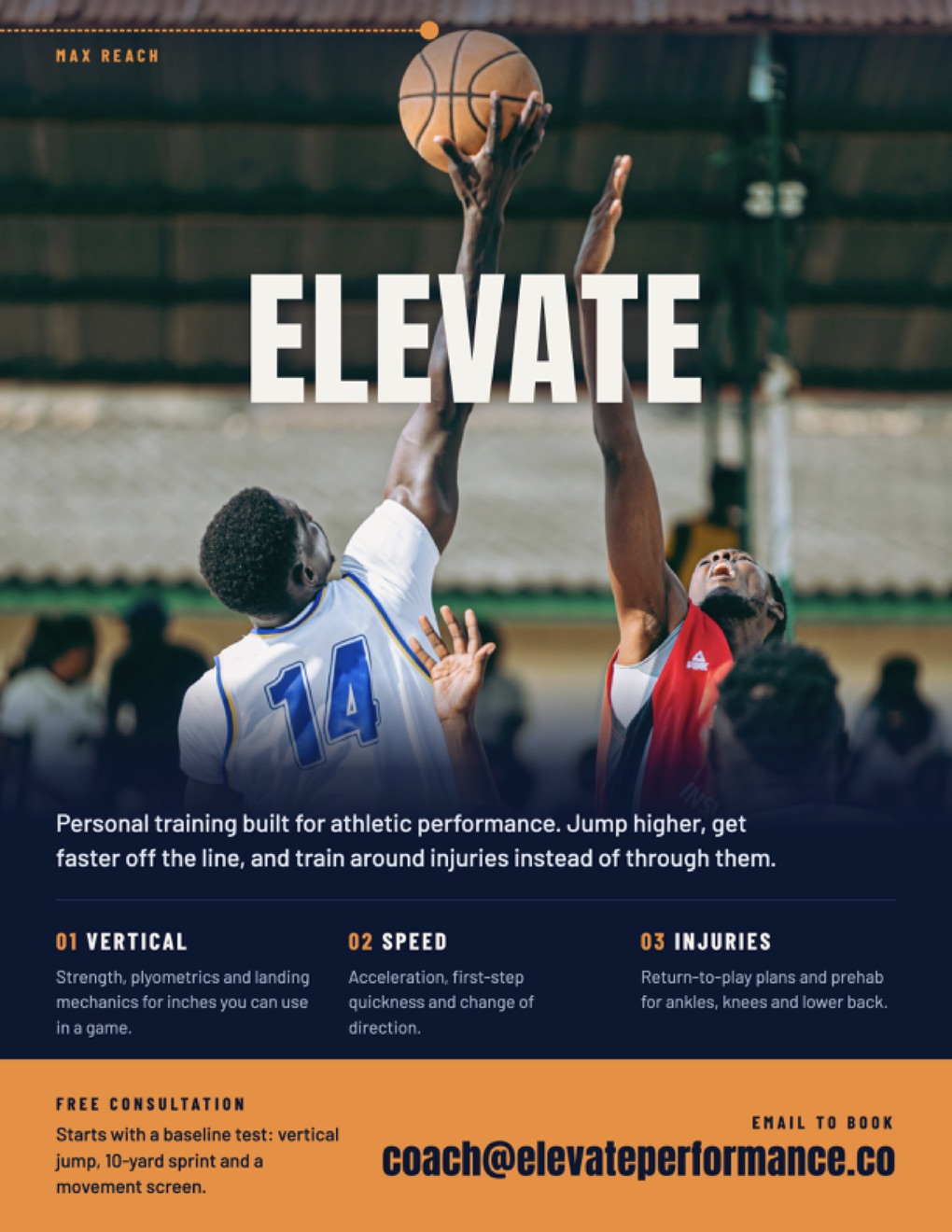
It's just as polished, but it's built for one kind of client: athletes who want to jump higher, get faster and stay healthy. A basketball player who sees it knows in two seconds that it's for them. It promises specific results (inches you can use in a game, a quicker first step), and even the free consultation says exactly what will happen: a vertical jump test, a 10-yard sprint and a movement screen.
Someone who isn't an athlete will scroll right past it, and that's fine. The right person stops, because it's talking to them.
Put this to work on a free TrainerMatch profile.
Join as a trainerKeep reading
Getting started
I just got certified as a personal trainer... now what?
Just passed your personal trainer exam? Here's what to do next: where to train, insurance and business licenses, pricing, finding your first clients, and finding mentors.
5 min read